Tiahni Adamson
National Aboriginal And Torres Strait Islander Engagement Manager
Bush Heritage Australia
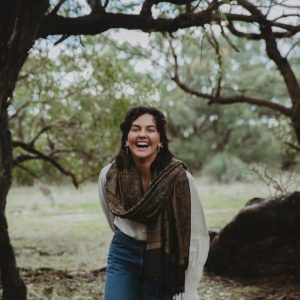
A proud Aboriginal and Torres Strait Islander woman descended from the Kaurareg Nation of Thursday Island, Tiahni Adamson is a nationally recognised conservation biologist, science communicator and advocate for climate justice and equity. As the National Aboriginal and Torres Strait Islander Engagement Manager at Bush Heritage Australia, she works alongside Traditional Owners to embed cultural governance in environmental management. Tiahni is also a Board Member of Green Adelaide, a member of South Australia’s Premier’s Climate Change Council, and founder of her own business that supports organisations to centre Indigenous knowledge in their work. Named the 2024 Young South Australian of the Year and recipient of the University of Adelaide’s Tirkapena Indigenous Distinguished Alumni Award, she has reached over one million people through national and international speaking engagements. Tiahni’s work spans grassroots activism, STEM education, and cross-cultural partnership building to foster healing-centred, community-led climate solutions.
Associate Professor Mark Ooi
Scientia Assoc Prof
University of NSW
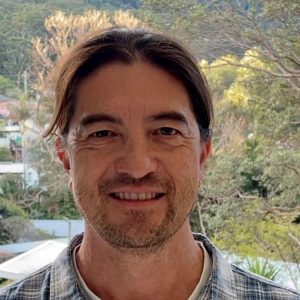
Associate Professor Mark Ooi’s research career has been driven by an interest in the great outdoors and has focused on plant and fire ecology. A lot of his work is aimed at gaining a better understanding of how plant population dynamics are driven by fire regimes and shifts in climate, and his research interests range from investigating mechanisms of functional plant response, to trait distribution patterns, seed ecology and applied conservation biology. He has published over 120 papers and collaborates on projects across Australia, as well as in Europe, China and Brazil. After completing his PhD, Mark worked as a postdoc at the University of Sheffield (UK), then at the University of Wollongong as an ARC Fellow, and now leads a lab as a Scientia Associate Professor at UNSW in Sydney. He is co Editor-in-Chief at the Australian Journal of Botany, a member of the NSW Threatened Species Scientific Committee, and has been awarded two Eureka Prizes as part of the NSW Bushfire Hub and the citizen science-focused Environment Recovery Project.
Jaana Dielenberg
Science Communication Director
Biodiversity Council
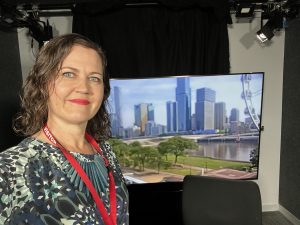
Jaana Dielenberg is a science communicator who knows how to get important nature issues into the spotlight. As the Biodiversity Council’s Science Communication Director, Jaana connects science, policy, and community to build support for solutions to Australia’s biodiversity crisis. Over the past year alone, she has generated more than 3,500 media stories, reaching 20 million people and helping drive real-world outcomes for nature. Jaana works closely with scientists and Indigenous Knowledge holders to communicate complex ideas clearly and powerfully—whether to policymakers, the public, or the media. In addition to leading media strategy, she is also a skilled spokesperson and science writer, with a strong track record in broadcast and print. She brings over 15 years of experience supporting research impact through communications, media, and stakeholder engagement, including as Science Communication Manager of the $72M NESP Threatened Species Recovery Hub and Knowledge Broker for the $30M NERP Northern Australia Hub. Jaana holds a BA (Geography) and a Master of Environment, and began her career in applied environmental management and waterway planning.
Clare Peddie
Fireside Chat
Science Journalist
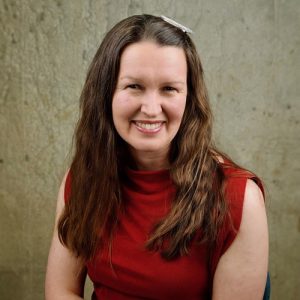
Clare Peddie is rare in the media landscape because she studied science at university before science journalism, and worked in research organisations before newsrooms.
She joined The Conversation as environment and energy deputy editor in 2023, after 15 years at The Advertiser newspaper in Adelaide (2006-22). Previously, she worked in communications at CSIRO Land and Water at Urrbrae, UniSA at Mawson Lakes, and the Queensland Institute of Medical Research in Brisbane.
Personal career highlights include interviews with her heroes – Sir David Attenborough, David Suzuki and Jane Goodall – and good times behind the scenes at zoos and wildlife sanctuaries. Looking back, she’s proud of her part in the “I Love Murray” campaign and Adelaide’s successful bid to become the world’s second National Park City, after London. Other memorable moments stem from coverage of the Millennium Drought, climate change and the rise of renewable energy.
Reporting on science and environment has been a rollercoaster ride, occasionally terrifying yet always entertaining.
Dr Lily van Eeden
Moderated Panel with Dr Megan Evans
RMIT University
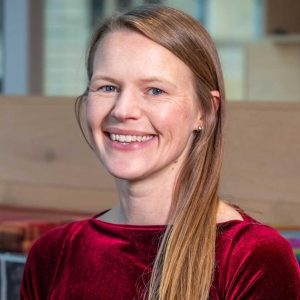
Dr Lily van Eeden is an interdisciplinary scientist with expertise in conservation biology and social sciences. Her career has spanned several conservation sectors, including working as a consultant ecologist, as a human behaviour change research specialist in Victorian government, and now as a lecturer in environmental science at RMIT University.
These experiences gave her a good understanding of the science-policy interface and the importance of understanding people to achieve progress on environmental challenges. Her research examines what causes people to act in ways that protect or harm the planet, from understanding people’s beliefs about nature through to industry practices and environmental policy.
This year, she began an ARC Industry Fellowship working in partnership with Victorian government to identify how human behaviour change science and systems thinking can support efforts to achieve Nature Positive objectives.
Dr van Eeden is a Superstar of STEM and a former Fulbright fellow. She has a PhD from the University of Sydney on human-wildlife coexistence and a Masters from the University of Oxford.
Dr Megan Evans
Moderated Panel with Dr Lily van Eeden
UNSW Canberra
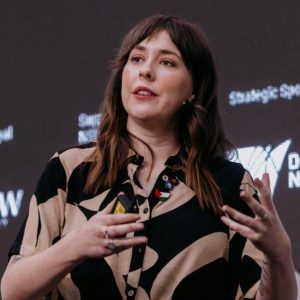
Dr Megan Evans is a Senior Lecturer in the School of Business at UNSW Canberra. She is an interdisciplinary social scientist whose work aims to inform the design, implementation and evaluation of environmental laws, policies and tools. Her research has contributed significantly to environmental policy in Australia and internationally, including work on forest regeneration carbon offset integrity that triggered the Independent Review of Australian Carbon Credit Units, the development of the Australian government’s biodiversity offset policy under federal environmental laws, and work on the economics of land-based carbon offsets that informed the establishment of the $500 million Land Restoration Fund in Queensland. Megan has engaged extensively with the federal government’s Nature Positive law reform process, and recently completed ARC Fellowship which examined the growth of private sector investment in biodiversity and natural capital. Megan holds undergraduate degrees in mathematics and ecology (UQ), a PhD in environmental policy (ANU), and is a member of the editorial board of the journal Conservation Letters.
Dr Jody Gunn
Keynote Speaker
CEO, Australian Land Conservation Alliance
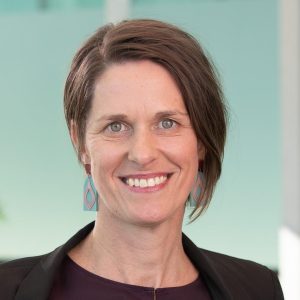
Dr Jody Gunn is CEO of the Australian Land Conservation Alliance (ALCA), where she leads the organisation’s work to advance large-scale conservation of Australia’s private land. With more than 20 years of experience across the academic, government, and not-for-profit sectors, Jody is a conservation scientist and executive leader committed to protecting land, water and culture at both national and international scales.
Before joining ALCA in 2021, Jody served for six years as an Executive Manager at Bush Heritage Australia. There, she oversaw the expansion of the organisation’s reserve network and partnerships, led the growth of a private land stewardship program on agricultural land, and deepened Aboriginal partnerships across Bush Heritage’s operations in South East Australia. Her earlier roles include leading joint management planning with the Northern Territory Parks and Wildlife Commission, and managing conservation partnerships for Fauna & Flora International.
She brings a deep understanding of the science, policy and practice of conservation, informed by a career grounded in collaboration and long-term impact. Jody holds a Bachelor of Science from the University of Melbourne, a PhD in Environmental Science from Anglia Ruskin University in Cambridge, and is a Churchill Fellow.
Phillipa McCormack
Future Making Fellow and DECRA Fellow, Environment Institute
University of Adelaide
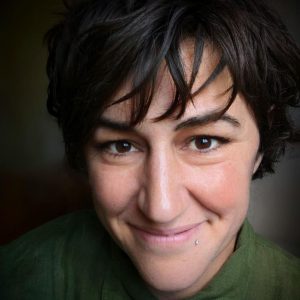
Dr Phillipa McCormack is an Australian Research Council DECRA Fellow at the Adelaide Law School and Environment Institute, The University of Adelaide. She began her career as an environmental lawyer, and her research expertise broadly centres on climate and environmental law and governance. Her highly interdisciplinary work includes analyses of climate adaptation, biodiversity loss and ecological restoration. In 2024, Phil was awarded a DECRA to investigate opportunities to reform the law to help human communities and biodiversity adapt as fire regimes change. She was the inaugural Early Career Research Fellow for Natural Hazards Research Australia in 2022. Phil is currently co-Chair of the Biodiversity Working Group for the National Environmental Law Association (NELA), board member and Chair of the Governance Committee for Tasmania’s statutory regional body, Natural Resource Management (NRM) South, and a member of the Diversity & Equity Committee of the International Association of Wildland Fire.
Page banner photo credit: Nick Fitzgerald